


Let’s talk about feet!
They could be affecting the rest of your body.
When’s the last time you thought about the effect your feet had on the rest of your body? Chances are, that thought has never crossed your mind. Our feet are the foundation of our bodies, providing support for all of our activities, so we should be thinking about them!
What are foot compensations?
At any given point while walking, your foot and ankle must be able to assume certain positions for you to be able to walk properly, or functionally. When our feet or ankles are unable to assume these positions, whether it be due to how we are structured or even muscle weakness, we find ways to compensate. Essentially, our bodies are smart! We need to walk, so we adjust our mechanics to make walking possible. However, these adjustments don’t only affect the foot and ankle.
When Physical Therapists are looking at the mechanics of your foot, we aren’t only looking at the foot. We check toe mobility, ankle mobility, foot flexibility, standing posture, and how you walk! Foot compensations can affect these aspects OR these aspects can be the cause of your compensations.
Common issues that could arise from foot compensations are:
- Ankle pain
- Knee pain
- Hip pain
- Low back pain
So… let’s look at some common compensations!
The Supinated Foot
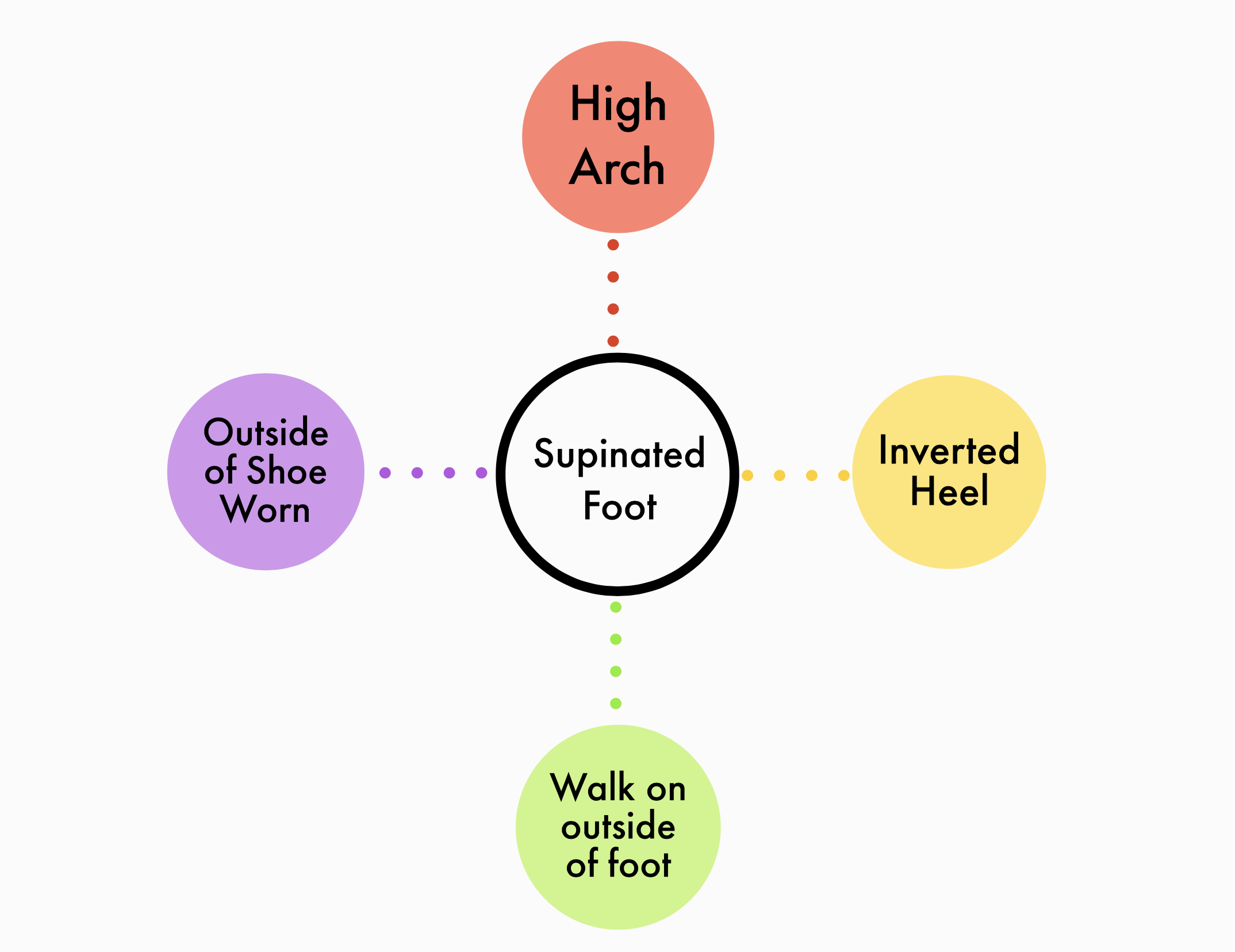
People with this compensation have high arches. In terms of foot structure, this usually means that the calcaneus (your heel bone) is inverted, and there is a tendency to walk on the outsides of your feet. If you have a high arch, you may also notice that the soles of your shoes are worn out along the outside.
The Supinated Foot
People with this compensation have high arches. In terms of foot structure, this usually means that the calcaneus (your heel bone) is inverted, and there is a tendency to walk on the outsides of your feet. If you have a high arch, you may also notice that the soles of your shoes are worn out along the outside.
The Pronated Foot
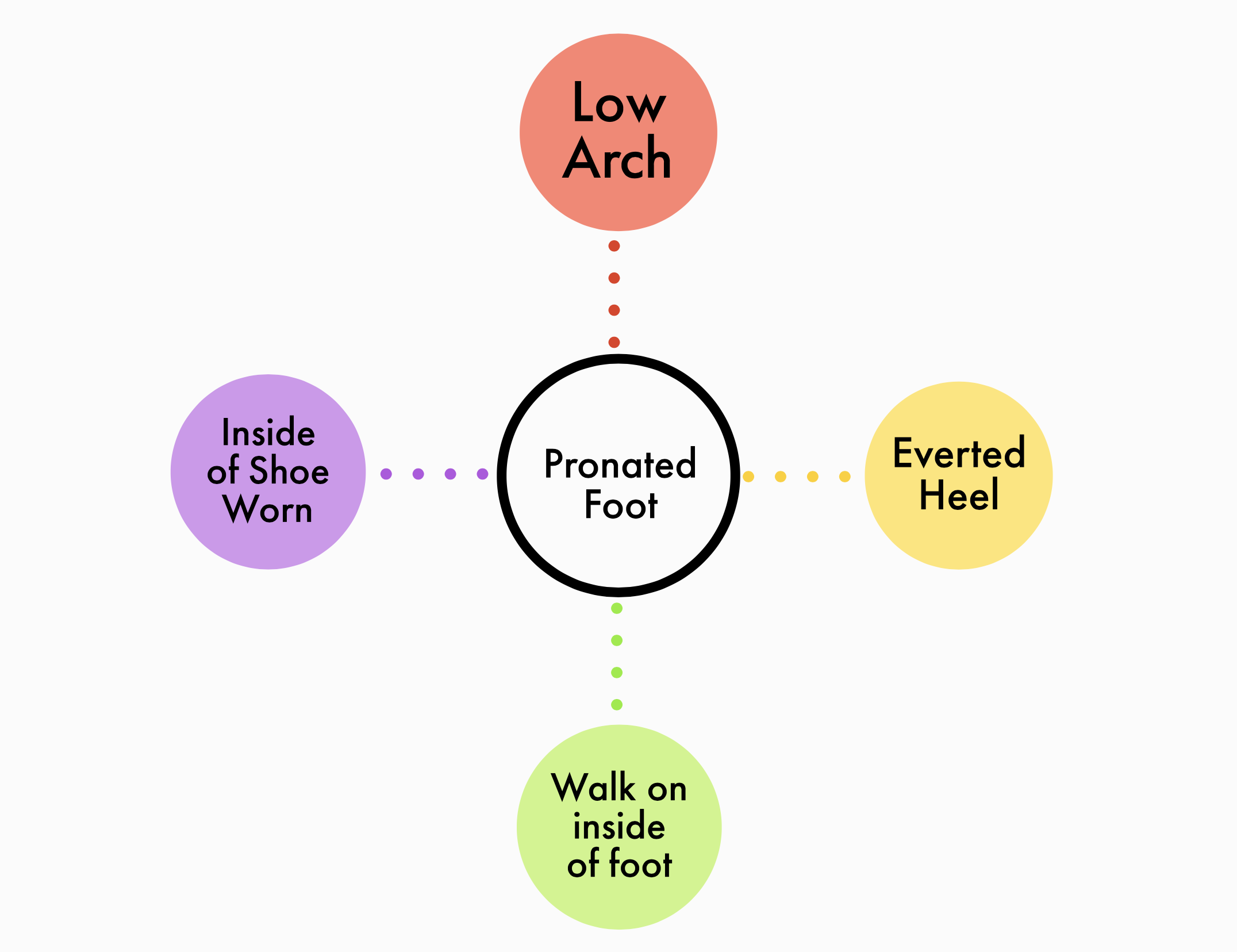
People with this compensation have low arches or what is commonly called flat feet. Foot structure for this compensation will be an everted calcaneus, and a tendency to walk more along the insides of your feet. For those with low arches, you may find that the soles of your shoes are worn out along the inside.
Twisted Foot
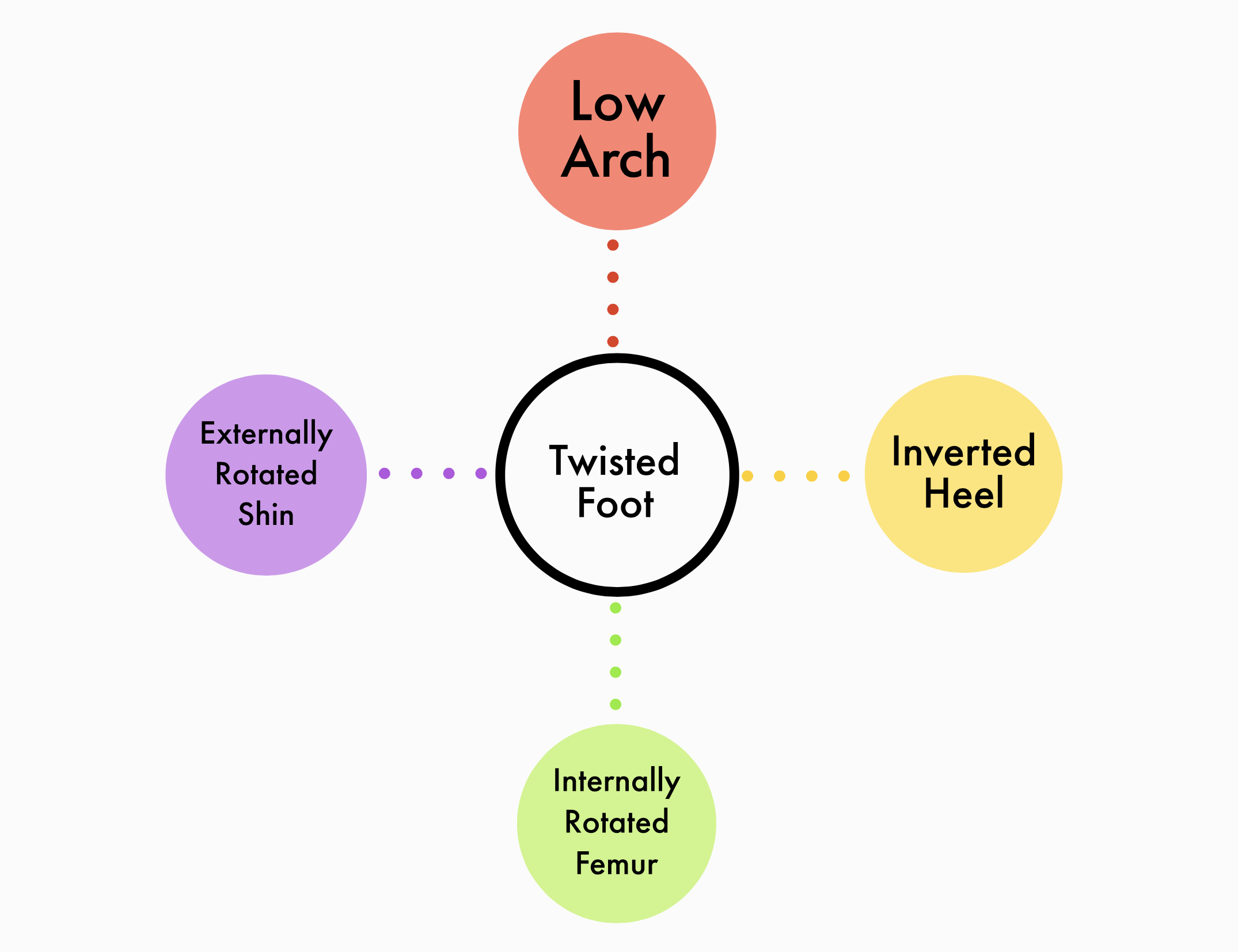
The last compensation is what I like to call the Twisted Foot, which is basically a hybrid of the compensations listed above. Now, this does not mean your foot is actually twisted. However, people who present with this compensation typically have a calcaneus that wants to be everted, but is unable to achieve that position.
So, because your body is smart, the front of your foot will “twist” in order to achieve a fake calcaneal eversion position. In simpler terms, the foot appears to have a low arch (pronated foot) , but the heel bone is inverted (supinated foot). This twisting at the foot also causes twisting up the legs. In this compensation, we commonly find the tibia (shin bone) to be externally rotated (twisting outward), and the femur (thigh bone) to be internally rotated (twisting inward).
What does all of this mean?
Reading information such as this can sometimes make people feel like something is wrong with them, or that they are broken in some way. Neither of these are true! Our bodies are amazingly adaptable and smart, so they adjust to what we need in order to function properly.
Compensations are often due to weaknesses that are easily helped. If you feel that you are using foot compensations, reach out to us! We can help identify why you may be compensating, and come up with solutions and goals to improve functionality. Let’s start thinking about our feet!
Meet our
Therapist

Schedule an Appointment Today
Book a session with one of our Pelvic Health Physical Therapists. Get in touch with us for more information or inquiries.